Leisure uses
ICT use is something that needs to be controlled in young people: Education and setting up children for success in life is the most important consideration for parents, grandparents and other family members.
The use of cell phones and computers is something that is overwhelmingly seen as detrimental to a child's studies, due to young people's inability to control their use of these devices for play. This discourse is also something that is internalized by young people; for instance, a student who had just finished his high school leaving exam that would determine his university placement (高考) said that, while he owns a cell phone, he would leave it at home during the time he was away at high school in the nearby town, using it only when he came home approximately every other weekend because he feared that he would not be able to control his own use of the device.
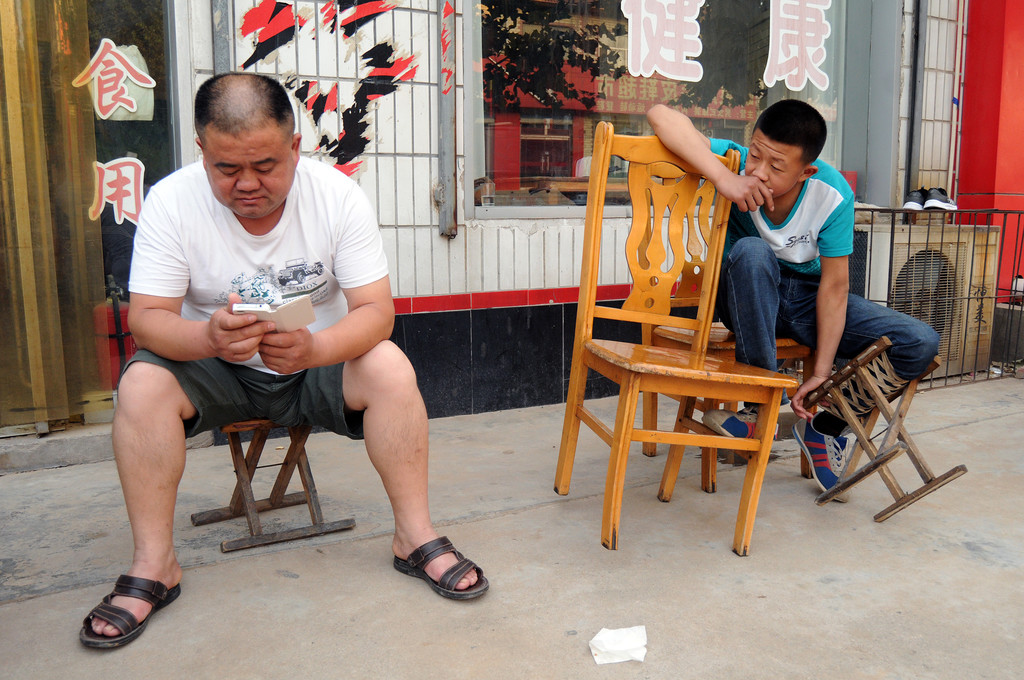
However, children, like the 13-year-old boy in this picture, watch their parents using ICTs from a young age and most 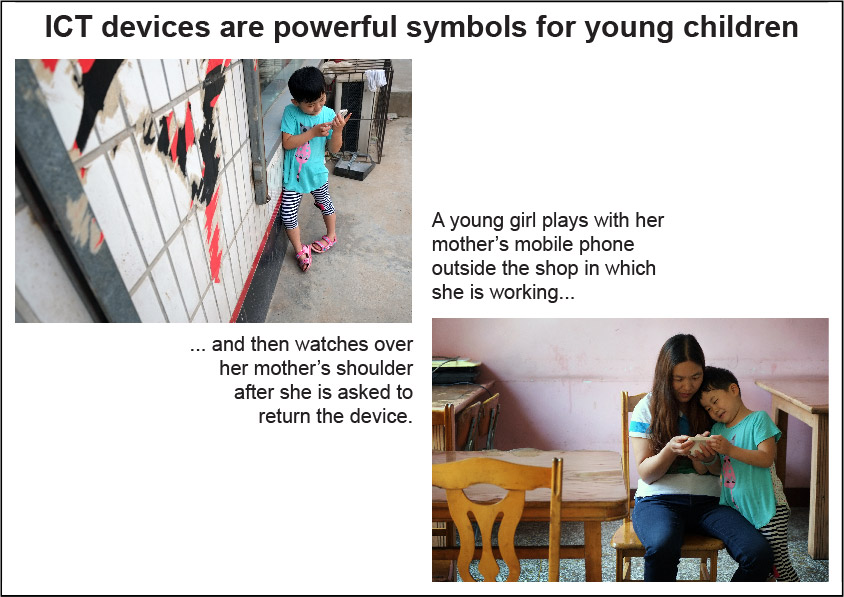 young people beg their parents to buy them a cell phone, to access the connectivity, entertainment and symbolism of adulthood that the devices afford. The father in this photo said that his son really wants a cell phone but that he refuses to buy one for him because he thinks that having the phone will affect his studies and he will just use the phone to play.
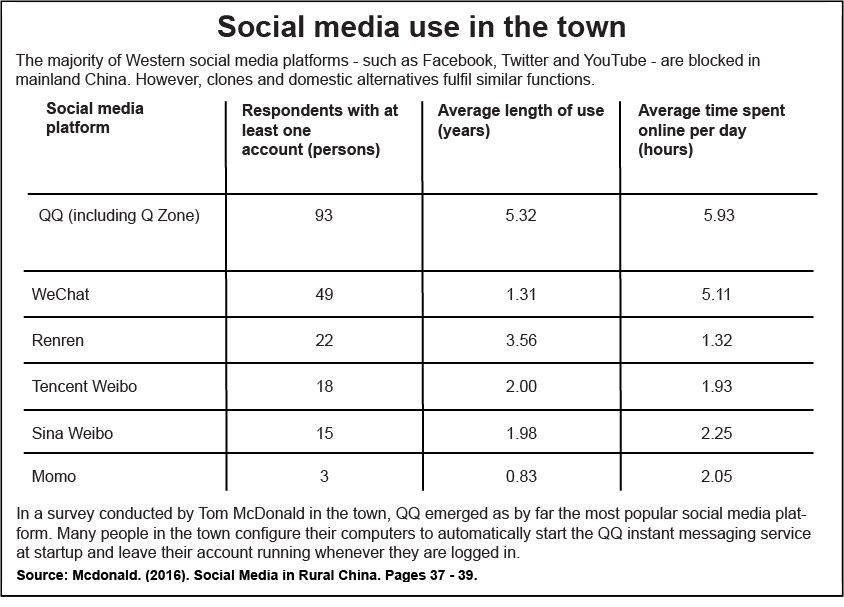 This is an extremely common sentiment that often starts to change when the child reaches high school. The town does not have its own high school and children tend to attend a high school in one of the neighbouring towns, only returning to their families approximately once every two weeks. Many more parents are willing to buy their children a cell phone at this point to help them keep in contact with family members and to contact home in case of emergency and trust the school to regulate and structure the child's ICT use. The importance of controlling young people's (and sometimes one's own) physical access to and time spent using ICTs is an important theme among people in the town.
However, few parents express the idea that it is important to teach children how to use ICTs in a safe and reasonable way, and indeed may not know how to do so themselves. Many adults express wonder and admiration at their children's ability to use and understand ICTs, that oftentimes exceeds their own. One teacher at the local middle school said that she thought the school needed to take a bigger role in this area: despite the relatively high-level technological capacity of the school, teachers still taught primarily from books, that the school's computer class only prepared students to pass the necessary exam. She felt that teacher needed to teach students how to search for useful information on the Internet and lead them toward the valuable aspects of ICT usage else they were liable to get lost in play.