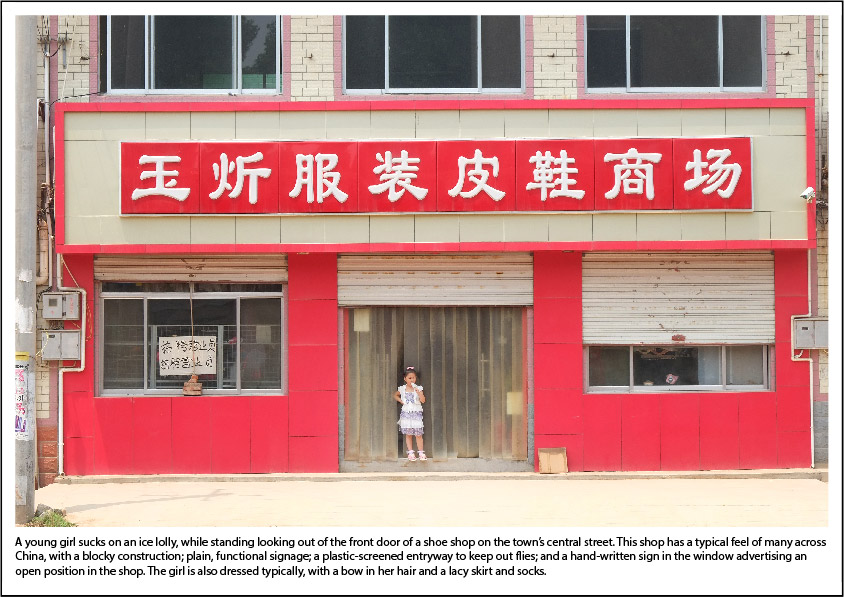
A Typical Town in Rural China
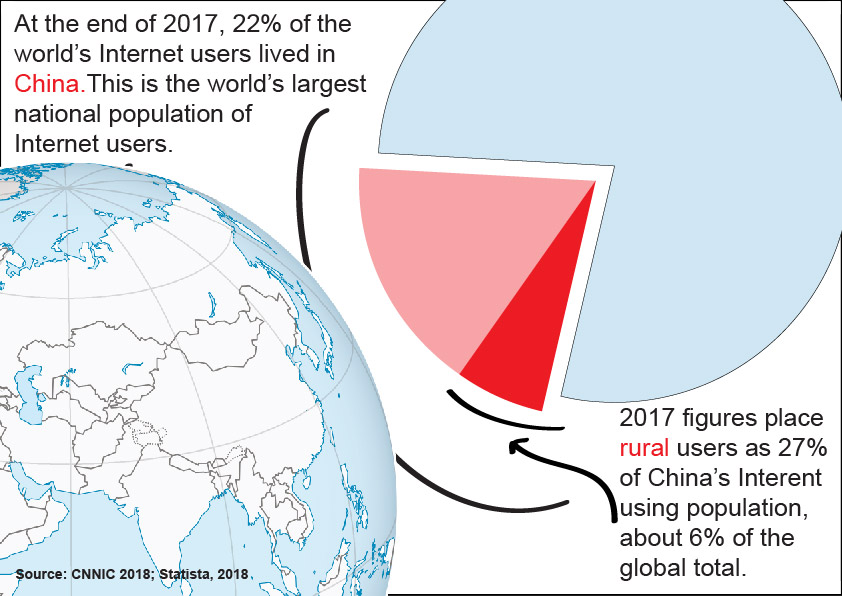
About 20 percent of the world's Internet users live in Mainland China, and more than half of these Chinese users live in rural areas. This is one of the fastest growing populations of Internet users in the world. However, much less is known about rural Chinese netizens than their counterparts in more developed, urbanized areas.
 However, evidence from a representative national survey in the UK has found that Internet users in more remote rural areas were less likely to be and less likely to be able to use the Internet in multiple ways and from multiple devices[1]. In China, as in other areas, the majority of work has focused on ICT use in urban areas, where these technologies were first introduced and popularized, and when considering rural populations often focus on rural-to-urban migrants rather than those who remain in rural areas.
Studying smartphones Xinyuan Wang found that these migrants saw the ownership of smartphones and the participation in online spaces as a way to signal and style themselves as modern, civilized people, shedding some of their rural identities through the use of ICTs, while simultaneously using these technologies to maintain connections with friends and family in their home villages.[2]
Also studying Chinese rural-to-urban migrants' use of ICTs, Jack Qiu found these users who he calls the "information have-lesses," may "spend more than ten hours a week online, yet do not know about search engines or possess personal Email accounts because they use the Internet mostly for entertainment." [3]These rural-to-urban economic migrants used ICTs to cope with the hardship of their lives, in ways that were different than for urban Chinese or non-Chinese populations.
 In studying Internet use in two rural areas, Jinqiu Zhao also concluded these individuals used the Internet differently and that, despite optimistic rhetoric about the Internet bringing social and economic changes to rural China, the "extent, duration, and intensity of its impact are primarily determined by the existing socio-economic contexts of the rural settings."[4] However, when Zhao completed her research in 2008 only 5% of rural Chinese used the Internet, now, that figure has risen to more than 30%, and both the Internet and China are a profoundly different place. Given this existing evidence that rural and urban users think of and use ICTs differently and the ever-growing importance of this user population, it is important to better understand how Chinese Internet users in rural areas approach ICT use.
2. Wang, X. "The Portable World: the Appropriation of Mobile ICTs among Chinese Rural Migrants". Paper presented at the Chinese Internet Research Conference, Hong Kong Polytechnic, 2014.