Researching ICTS in Rural China: an interactive website
Research on ICTs: What do we know? Why is it important?
This project situates its investigation of the effects of ICTs on modern life by looking at a rural Chinese village, but to a certain extent this could be anywhere. Once a non-Chinese viewer overcomes the strangeness of the cultural setting, our collective humanity and the similarly of the lived experiences of individuals connecting to globalized world is evident.
But there are important reasons for choosing this particular site. The so-called global Internet revolution of the past 10 years was largely limited to a western and urbanized population, but as Google's Eric Schmidt and former US State Department advisor Jared Cohen point out in their book The New Digital Age[1], Internet connectivity is expected to be extended to five billion new users over the next decade and ICT technologies will be as, if not more, revolutionary for these users at the base of the global economic pyramid than they were for those at the top of it.
China is already the world's largest internet using population, having overtaken the US in 2008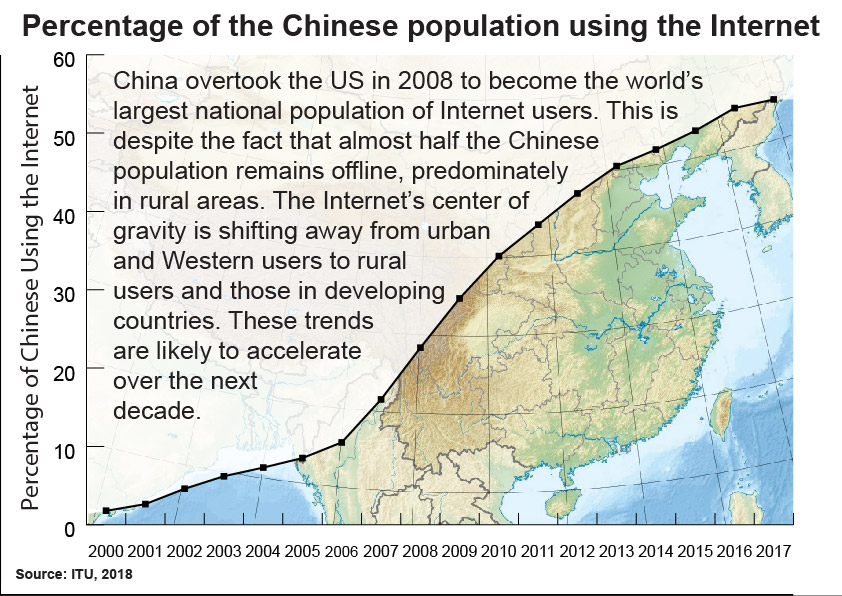 . Yet, just under half the Chinese population still remains offline, predominantly in rural and minority areas. These individuals, who are currently coming online at a rapid rate, will drive the Internet of the future, and this is why we bring you to a rural town in north-eastern China to begin our exploration of the place of information and communication technologies in modern life.
All academic research projects start by addressing two questions:
- Firstly, what do we already know about the topic? And what do we still not know?
- And, secondly, why is it important for us to know the answers to these still unanswered questions?
Given that you have arrived at this site, you probably already know something about ICTs. You probably understand that these new technologies have rapidly moved to be part of your everyday life and that they have affected society, politics and daily life in a lot of ways that intuitively we might thing we know, but are really yet to understood deeply and fully. However, because these new technologies first came to and are still more important in more developed, urbanised areas, we know relatively little about how ICTs are affecting the more numerous but less connected populations both in our own countries and in other countries like China, India, Indonesia or Nigeria.
In China, we know that the Internet still remains the preserve of the urbanized. At the end of 2017, 73% of Chinese individuals living in urban areas had access to the Internet, but only 27% of those living in rural areas did[2]. This population of unconnected individuals in China living in rural areas amounts to 430 million people, one of the largest populations of potential Internet consumers in the world[3].
The proliferation of smart phones is rapidly increasing connectivity among these rural Chinese populations, particularly with cheaper Chinese models such as the Xiaomi. 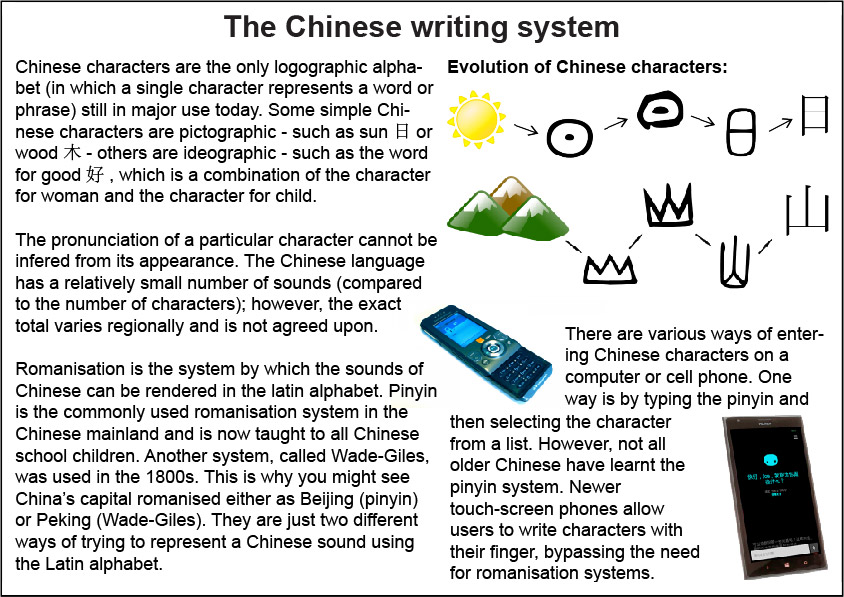 Smart phones are also particularly important in China because when laptops and phones only had keyboards that used the Latin alphabet one needed to know the pinyin romanization system in order to type in Chinese, which many rural and elderly do not. However, with smart phone touch screens, Chinese characters can now be input by drawing the character, increasing the accessibility of these technologies and their ease of use for Chinese speakers.
However, most of the work on ICTs in China focuses on urban populations, and when it does consider rural populations it is normally in the context of rural-to-urban migrants rather than looking at the conditions of those living in rural areas. Additionally, much of the work on ICTs in China focuses on politics, censorship and state control. These things are, of course, important, but sometimes this focus on the political and the censored obscures the investigation of the things that are really there: these more mundane but ultimately just as important lived realities of regular individuals, who, just like people in the West, are more concerned with questions like will a smart phone negatively affect my child's school work or can I find a better deal and more options shopping online than in my local store?
But the exact nature of the questions that regular Chinese individuals in rural areas are asking, and the answers they find and the decisions they make, these things are still largely unknown. And it is important to understand the impact of ICTs in rural China for several reasons: firstly, this is a large and understudied population that is rapidly growing in size and global importance, but this project is definitely not just about numbers. Understanding the impact of ICTs in rural China is important because of what it teaches us about people in general, and what we can learn about our own lives by seeing the parallels and empathizing with the lives of those who may, on the surface, appear to be very different from ourselves.
We believe that photography has a unique ability to incite these kinds of connections. Photography is used in this project not just to present academic research to viewers but for the researchers to engage and connect with the people in the town that we are studying. The photos presented in this project were printed and shown to people in the town during the research process. 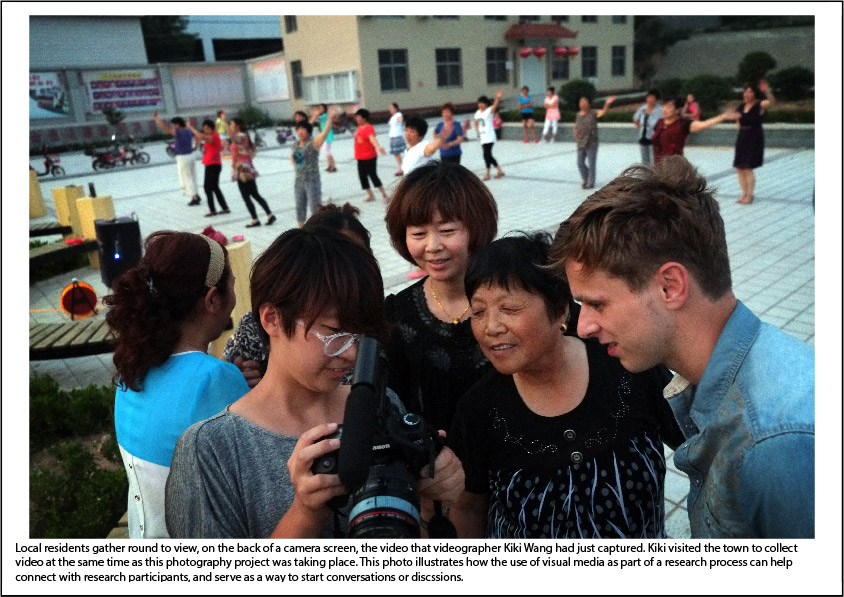 We discussed with the people pictured, why the picture was taken, what we saw in it, and asked them what they saw in the picture and their reactions to what we saw. In this way, through the medium of photography and online interactive presentations, we can shorten the distance and blur the boundaries between the rural Chinese living in this town, the academic researchers engaged in this project, and you, the viewer, who is invited to explore these issues, learn more and contribute your own thoughts using visual media as an interactive research methodology but in the next section, we invite you to learn more about this town that forms the basis for our exploration of ICTs in rural China.